AI-Powered Insights for Chest Radiography
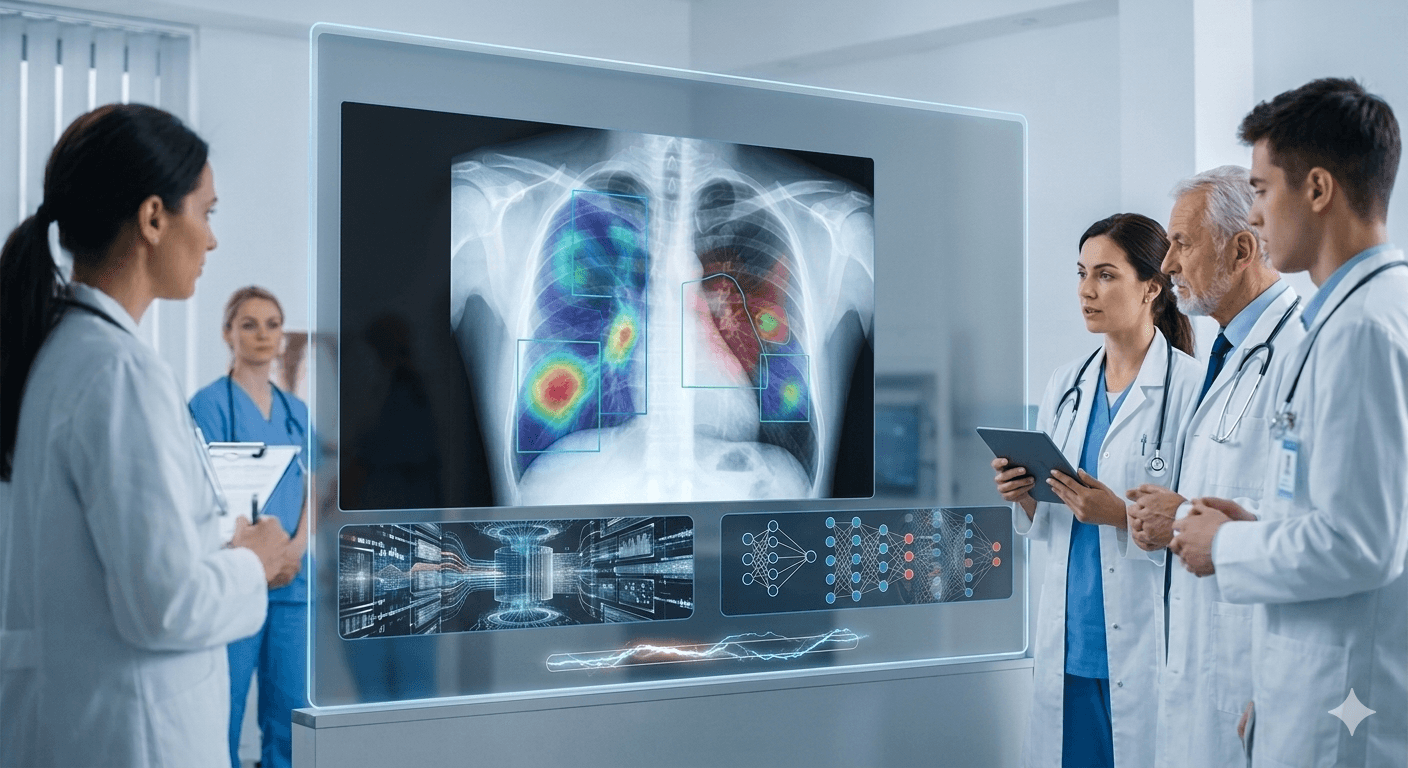
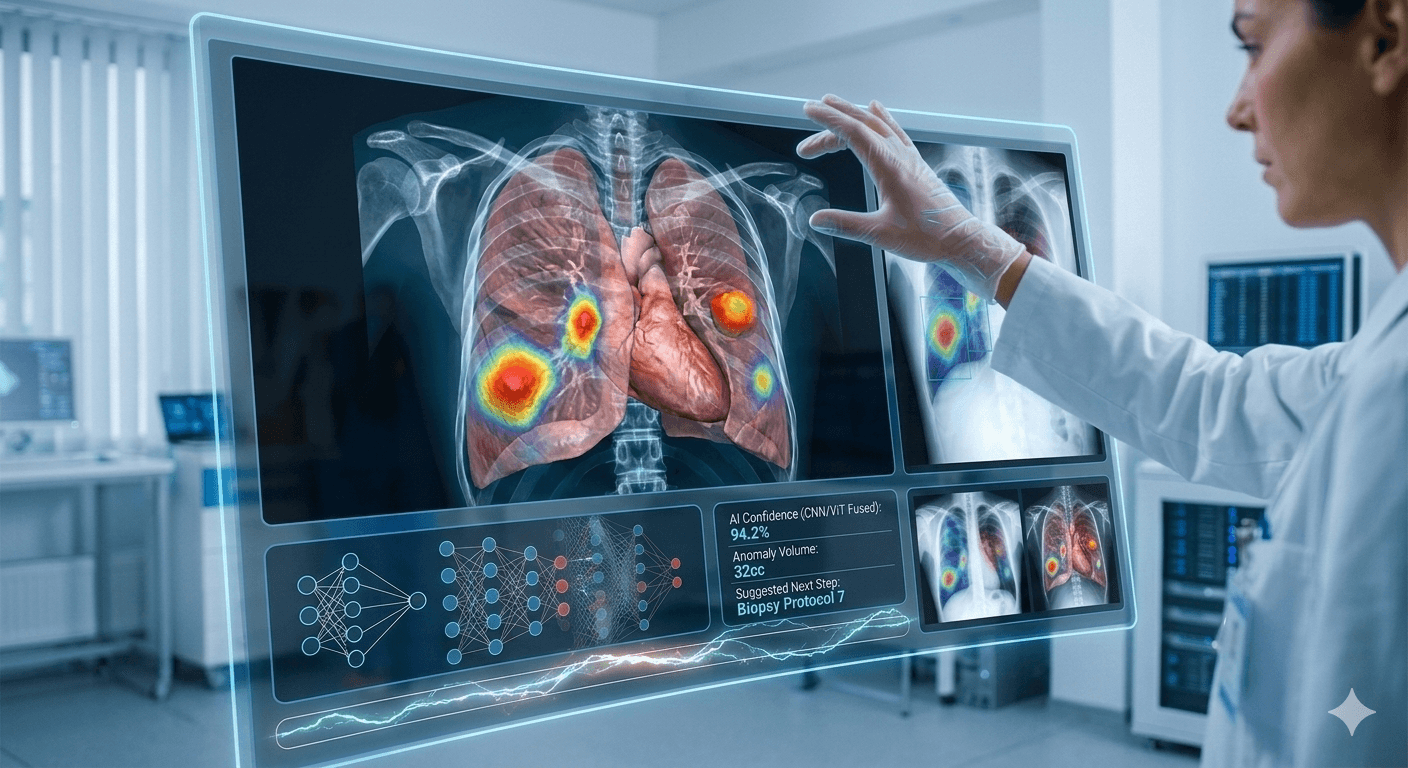
AI-Assisted Chest X-ray Analysis for Detecting Multiple Chest Diseases with Visual Explanations
Advanced Clinical Capabilities
Equipping medical practitioners with cutting-edge AI tools to better assist in diagnoses and provide greater confidence.
Multi-Disease Detection
Detect multiple chest diseases from a single X-ray using an advanced deep learning framework trained on large clinical datasets.
Comprehensive Analysis
Analyzes chest X-rays by identifying both small localized abnormalities and broader disease patterns, improving detection.
Explainable AI Trust
Generates visual heatmaps highlighting disease-related regions, helping clinicians understand model predictions clearly.
Detecting 14 Thoracic Abnormalities
Our AI model is meticulously trained to recognize a wide spectrum of visual patterns associated with common and complex lung conditions, providing thorough and accurate diagnostics.
Atelectasis
Partial or complete collapse of a lung or lung segment, leading to reduced air volume and visible opacities on X-rays.
Cardiomegaly
Enlargement of the heart, often seen in patients with heart failure or chronic hypertension.
Consolidation
Filling of the lung's air spaces with fluid, pus, or other material, commonly seen in pneumonia.
Edema
Accumulation of excess fluid in the lung tissue, often related to cardiac conditions such as heart failure.
Effusion
Buildup of fluid in the pleural space surrounding the lungs, which can cause shortness of breath.
Emphysema
A chronic lung condition that damages the air sacs (alveoli), leading to overinflated lungs and difficulty exhaling.
Fibrosis
Formation of scar tissue in the lung, making it stiff and reducing its capacity to expand.
Hernia
Protrusion of abdominal organs into the chest cavity through the diaphragm.
Infiltration
A general term for the presence of abnormal substances (such as inflammatory cells or fluids) in the lung tissues, often nonspecific.
Mass
A well-defined large abnormal area or lump that may indicate a tumor or other growth.
Nodule
A smaller, localized round lesion that may represent early signs of infection, inflammation, or tumor.
Pleural Thickening
Thickening of the pleural lining of the lungs, which can result from inflammation, infection, or previous pleural disease.
Pneumonia
Infection that inflames the air sacs in one or both lungs, which may fill with fluid or pus.
Pneumothorax
Presence of air in the pleural space, leading to partial or complete collapse of the lung.